|
By Jerry Tardif
Should you use a mounting block when getting on your horse to ride?
Obviously, it's not necessary, but it is a very good idea.
There's no doubt that mounting directly from the ground using the stirrup puts a strong twisting force on your horse's spine.
And there is now growing consensus among equine medical practitioners that the aforementioned twisting force can do damage to the skeletal system of some horses.
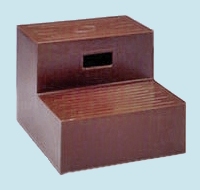
2 Step Mounting Block
|
Using a mounting block or any other method that gets you high enough to just swing your leg over the saddle without putting all your weight (plus a strong jerk to lift yourself off the ground) will avoid putting all that stress on your horse's spine.
Alternatives include a hillside, large stone, a stable large log, a solid tree stump, and other objects strong enough to support your weight.
Avoid obviously unstable items, such as small loose logs and slippery surfaces.
|
The amount of strain on your horse's spine is dependent upon several factors:
- The size of your horse – a small horse is affected because he has a small spine and your weight is a larger percentage of his than would be the case with a larger horse;
- The height of your horse – while taller horses are generally larger, there's potential for significant spinal stress because the rider jerks harder to get higher;
- The weight of the rider – heavier riders more severely strain a horse's spine;
- The height of the rider – a shorter person is usually a lighter person; but for short, heavy riders, they may be just as heavy as a taller rider, plus exacerbate the situation further by having to work harder getting up and can put strong, twisting, jerking forces on the spine in the process — often, more than one before they finally get up.
Also, don't ignore equine joint illnesses and infections, such as degenerative joint disease (DJD) or Lyme Disease.
If your horse has such a problem, using the mounting block is better for him; it won't unnecessarily stress those joints and cause pain.
There's another advantage to using some mounting aid — it's easier on the rider.
You don't have to hyper-stretch your leg and do that jump/jerk to pull yourself up.
Of course, when out on the trail, you'll have fewer options getting back on if you have to dismount for some reason.
But even there, you can often mount from a rock, hillside, stump, or large fallen tree or log.
That doesn't mean you'll never have to mount directly using a stirrup, but it does mean you can greatly reduce the number of times you put that strong twisting force on your horse's back.
You can learn more about proper mounting technique from our Mounting Pressures article.
Besides being an avid trail rider, Jerry Tardif is a technology consultant and a horse and nature photographer in SE Connecticut — see his work at: www.jerrytardif.com.
He is also co-founder and President of QueryHorse.
Back to Article Index
|